The five most important car checks before a weekend trip are tyres, engine oil and coolant, the battery, brakes, and wipers with lights. Check them before departure day so there is time to fix a problem. A warning light, damaged tyre or braking problem is a reason to pause the trip, not hope for the best.
Bags packed. Playlist ready. Car checked? Whether you are planning a sunrise drive to Nandi Hills or a longer break from Bangalore, give the car some attention before the long weekend begins. This checklist is a starting point, not a substitute for servicing or a professional inspection. Your owner’s manual takes priority.
Table of Contents:
1. Tyres: pressure, condition and spare
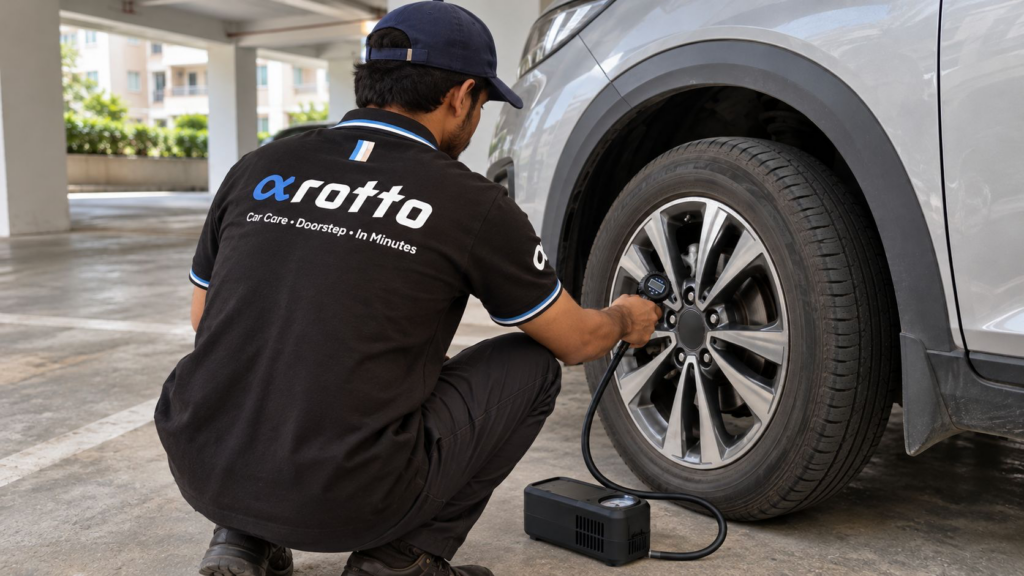
Check tyre pressure when the tyres are cold, using the figures in your owner’s manual or on the vehicle’s door or fuel-flap label. Use the recommended setting for your passenger and luggage load. Do not copy another car’s pressure or treat the tyre sidewall number as the recommended setting.
Look for cuts, bulges, cracks and uneven or worn tread. A tyre can hold air and still be unsafe. Have damage assessed before leaving; repeatedly topping up a leaking tyre is not a fix. Check the spare if your car has one, plus the jack and wheel tools. For cars with a repair kit, check its instructions and expiry date.
Michelin India’s tyre guidance recommends pressure checks before extended driving and checking the spare too.
How to check your tyres in about 10 minutes:
- Do it before the car has been driven far, so the tyres are cold.
- Find the recommended pressure for your load in the owner’s manual or on the door or fuel-flap label.
- Use a gauge or a petrol-pump air machine to read each tyre, including the spare. Add or release air to match the label.
- Walk around the car and look at each tyre’s sidewall and tread for cuts, bulges, cracks or uneven wear.
- Confirm the jack, wheel spanner and spare are in the boot and easy to reach.
2. Engine oil and coolant: check levels safely
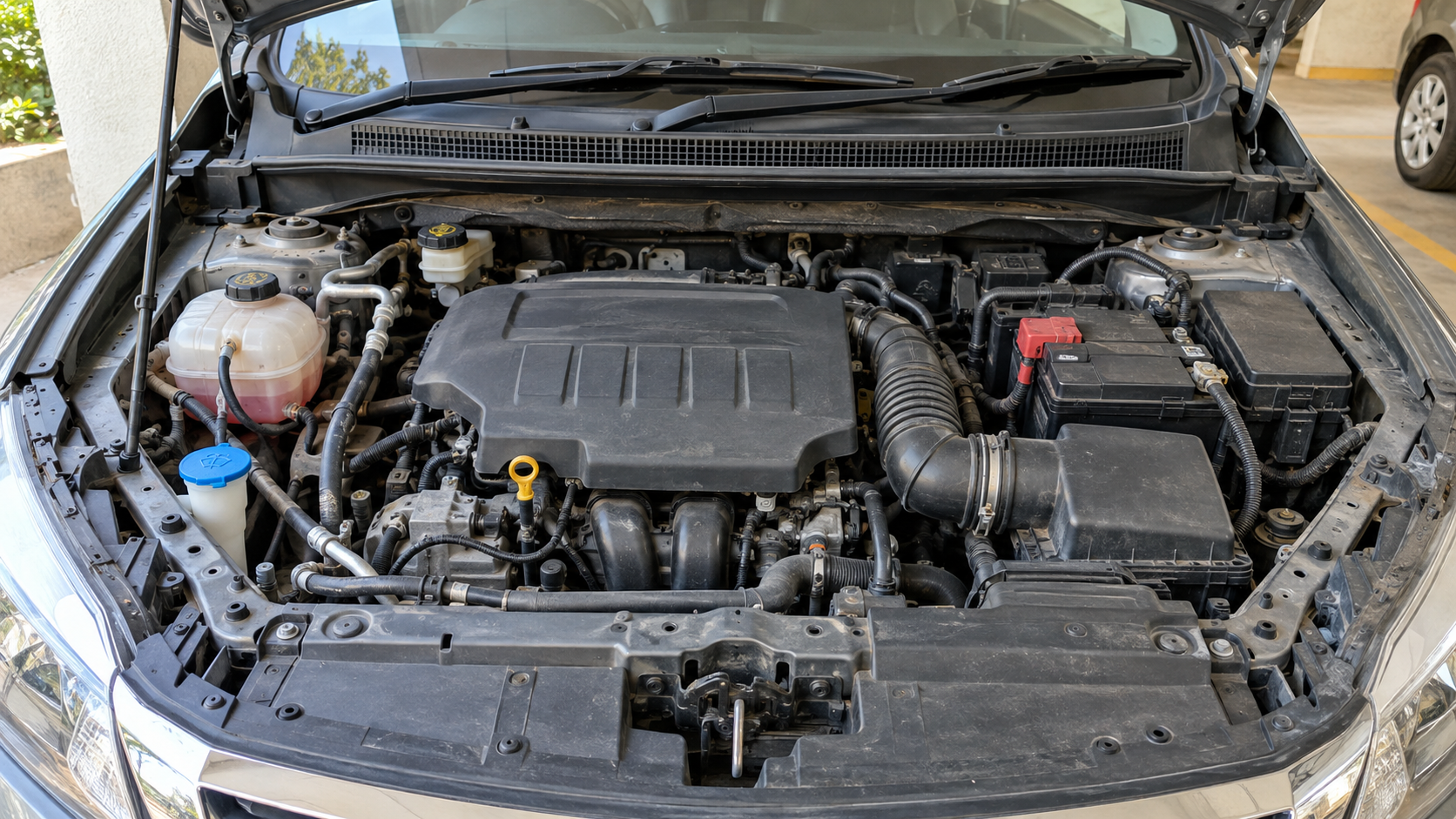
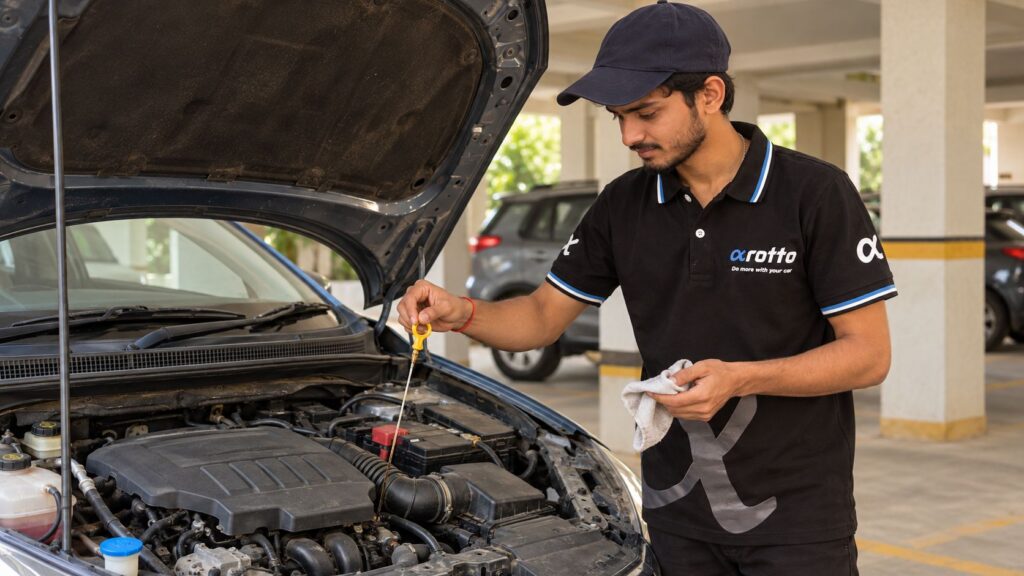
Park on level ground, switch the engine off and follow your manual’s instructions for when to check the oil. If your car uses a dipstick, wipe it, reinsert it fully and read the level between the minimum and maximum marks. Some cars use an electronic oil-level display instead.
If oil needs topping up, use only the specified grade and do not overfill. If you are unsure, ask a technician. An oil-pressure warning is not simply a reminder to add oil; follow the manual’s stop instructions and arrange help.
Check the coolant reservoir only with the engine cool. Never open a hot radiator or coolant cap: pressurised fluid can cause burns. Low coolant, repeated top-ups or a visible leak needs investigation before the journey. Avoid mixing fluids or adding whatever is available.
How to check oil and coolant:
- Park on level ground, switch the engine off and wait until it has cooled.
- Pull out the oil dipstick, wipe it clean, push it back fully and pull it out again. The oil should sit between the minimum and maximum marks.
- Find the coolant reservoir and read the level against its min and max lines. Do not open the cap while the engine is warm.
- Look under the car and around the engine for fresh drips or wet patches.
- If a level is low or keeps dropping, book a check instead of topping up again and again.
3. Battery: notice a hesitant start
Listen when the car starts. Slow cranking, repeated clicking or a recent need for a jump-start deserves a battery and charging-system check before you leave. Starting successfully once does not prove the battery is healthy.
Look for obvious corrosion or a damaged battery case without touching terminals or cables. Leave cleaning, tightening and testing to someone who knows the correct procedure for your car. Do not disconnect the battery to clear a warning light. If your car has been parked for a while, arrange a check rather than assuming a long drive will fix it.
How to do a simple battery check:
- Switch on the ignition and listen to the first start. It should crank briskly and catch quickly.
- Notice the headlights and dashboard at start-up. If they dim a lot or flicker, the battery may be weak.
- Look at the battery case and terminals for cracks, swelling or white or green crust. Look only and do not touch.
- Think about the last few weeks: did the car struggle to start or need a jump? If yes, get it tested before the trip.
- If the car sat unused for days, ask a mechanic to test the battery and charging system.
4. Brakes: take changes seriously
Grinding, pulling to one side when braking, a soft pedal or reduced stopping ability needs attention before the trip. Do not set off with a known braking problem, and do not use a highway drive to test whether it improves.
A brake warning light needs checking against your manual. Low brake fluid can point to a fault, so do not simply top it up and consider the problem solved. The AA’s maintenance guide advises an immediate mechanic check for unusual braking sounds, pulling or longer stopping distances.
A quick brake check you can do yourself:
- With the car parked and the engine off, press the brake pedal. It should feel firm, not sinking slowly to the floor.
- Start the engine and check that no brake warning light stays on.
- Drive slowly in a quiet, empty spot and brake gently. The car should stop in a straight line, with no grinding, squealing or pulling to one side.
- Check that the handbrake holds the car on a slope.
- If anything feels different from usual, do not travel until a mechanic has checked it.
5. Wipers, washer fluid and lights: see and be seen
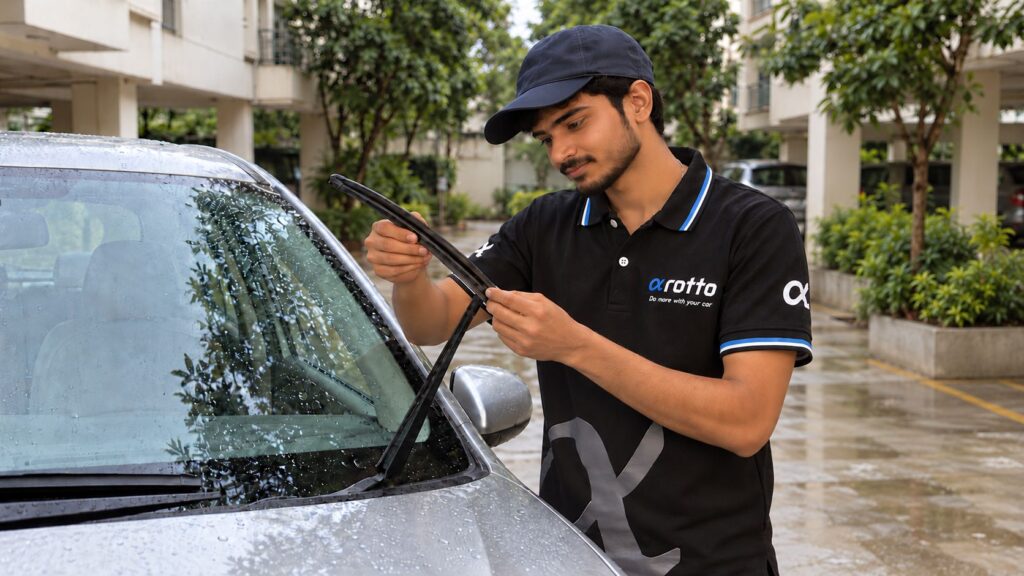
Test the wipers on a wet windscreen, not dry glass. Replace blades that leave streaks, skip or have split rubber. Top up washer fluid as your manual recommends, and clean the windscreen and mirrors.
Check headlights, indicators, tail lights and brake lights while parked; ask someone to help check the rear. Fix failed lights before travelling. If a dashboard warning stays on, identify it before departure. Our guide to driving with the check engine light on explains why a steady light and a flashing light need different responses.
How to check wipers and lights:
- Spray the washer and run the wipers on a wet windscreen. Watch for streaks, smears or skipping.
- Check the washer fluid level and top it up if it is low.
- With the engine on, switch on the low beam, high beam, indicators and hazard lights.
- Ask someone to stand behind the car while you press the brake and put it in reverse, so you can confirm the brake and reverse lights work.
- Clean the windscreen, mirrors and light covers before you leave.
When to skip the trip
Some warning signs mean the car should not go on a long drive until a mechanic has looked at it. If you notice any of these, postpone the trip or arrange another way to travel.
- A flashing check engine light, or any warning light that stays on after you start the car
- A soft or sinking brake pedal, or grinding when you brake
- The temperature gauge climbing, steam from the bonnet or a coolant smell
- A bulge, deep cut or sidewall damage on any tyre
- Oil or fuel dripping under the car
- Repeated hard starting or a dead battery
A delayed weekend is a small cost compared with a breakdown on the highway or an accident.
Frequently asked questions
How many days before a trip should I do these car checks?
Aim for two to three days before you leave. That leaves time to book a mechanic, order a part or replace a tyre. Do a quick look at tyres, lights and warning lights again on the morning you leave.
Can I do these checks at home without tools?
Most of them, yes. Tyre condition, oil and coolant levels, wipers, lights and the way the car starts need only a clean cloth, a tyre gauge and a few minutes. Anything inside the engine, brakes or battery is a job for a mechanic.
Can Rotto do a pre-trip check at my home or office in Bangalore?
Yes. Rotto offers a doorstep pre-road-trip inspection in Bangalore. Tell them your car model and any symptoms when you book, and ask what the inspection covers.
What if a check fails on the morning of the trip?
Do not leave and hope it sorts itself out. Tyre pressure and washer fluid you can fix on the spot. For a warning light, a weak battery, a brake problem or a leak, get it looked at first or take another car.
Do I still need a service if I do these checks?
Yes. These checks catch obvious problems, but they do not replace your regular service. Follow the service schedule in your owner’s manual.
Get your car checks before a weekend trip done at home
If something does not look or feel right, sort it out before packing the boot. Rotto offers doorstep pre-road-trip inspections in Bangalore. Share your car model and any symptoms when booking, and ask what the inspection covers. If repairs are recommended, use our car repair quote checklist before approving the work.
Leave a Reply