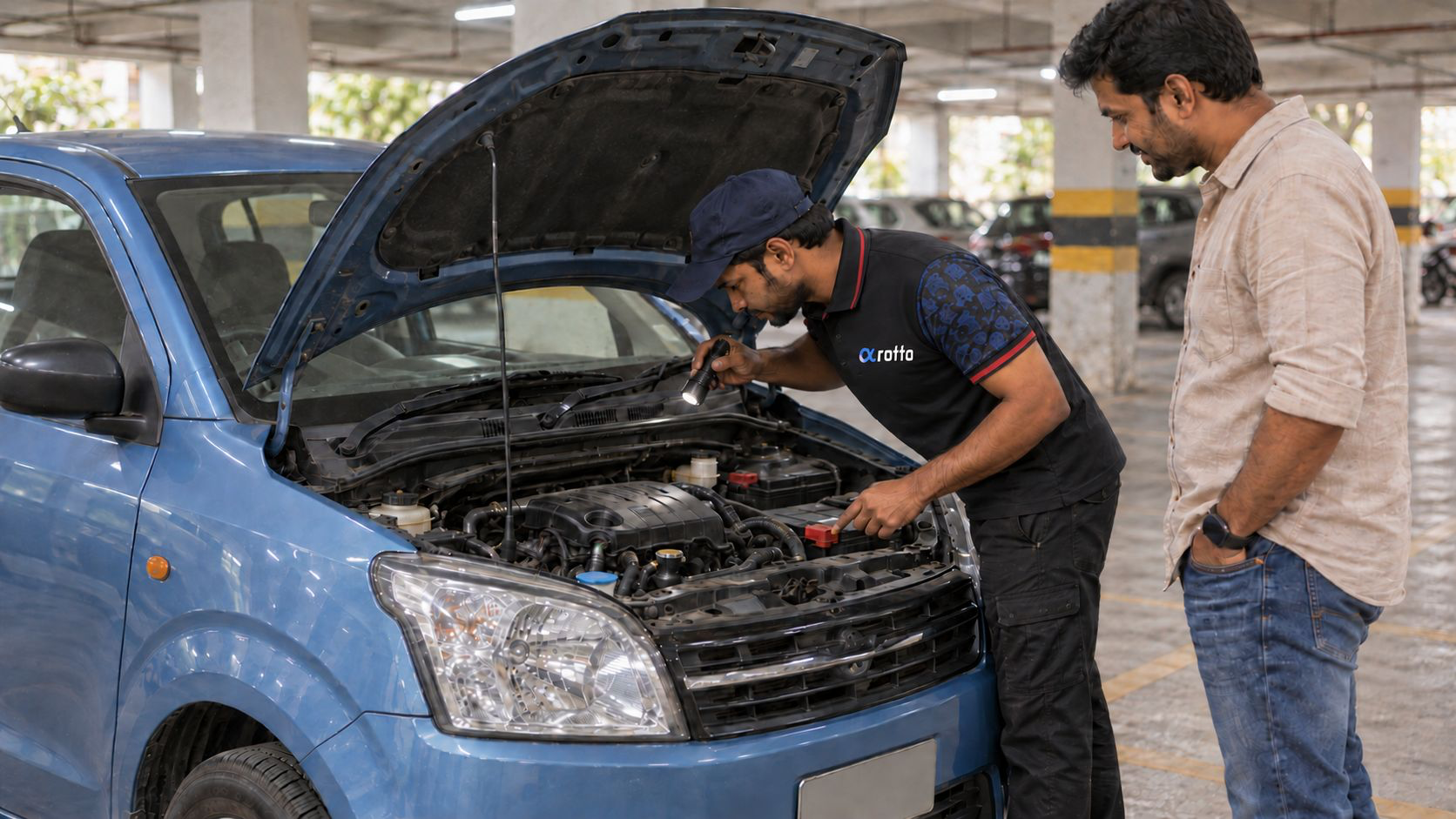
A steady amber check engine light may allow a short, gentle trip for a check if your car runs normally and your owner’s manual permits it. A flashing light, shaking, loss of power, smoke or an unusual smell means you should pull over safely, switch off the engine and arrange help. Do not assume an amber light is harmless or keep driving just because the car still moves.
The light warns of an engine or emissions-system fault. It does not tell you which part needs replacing. Your car’s manual takes priority over general advice.
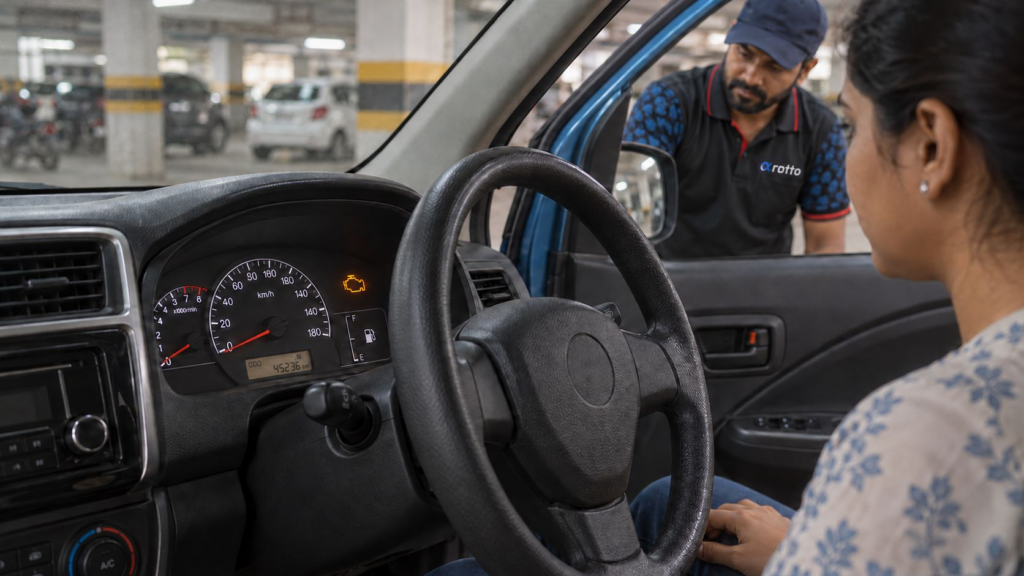
Check engine light on? 5 simple steps
- Check whether it is steady or flashing
Observe the light without taking your attention off the road. A steady amber light needs prompt investigation, even when the car feels normal. Keep any permitted journey short and avoid hard acceleration or high engine speeds.A flashing light can indicate an engine misfire. Ford’s warning-lamp guidance explains that the extra exhaust heat can damage the catalytic converter or other components. Do not try to reach your usual garage across the city. Stop somewhere safe and ask for assistance.
- Look for symptoms that mean you should stop
Shaking, a sudden drop in power, smoke, strange noises or a strong fuel or burning smell change the decision. Stop safely rather than testing whether the problem improves with more driving.
An oil-pressure or temperature warning is a separate warning, not another version of the engine light. Follow the manual’s stop instructions. If you cannot identify the symbol, park safely and check the manual before continuing.
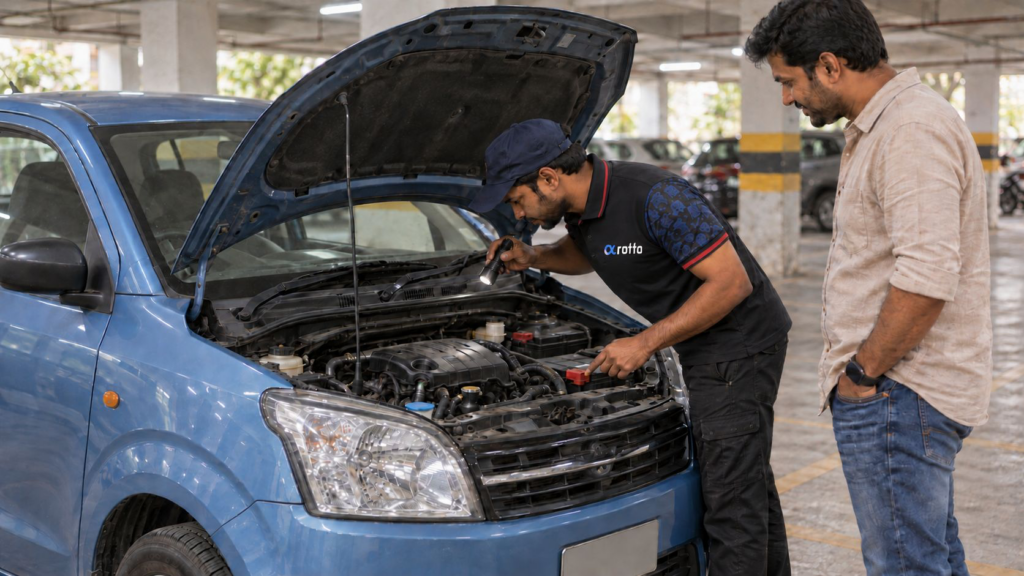
- Check simple things only after parking
If the light appeared after refuelling, check that the fuel cap is properly secured, if your car has one. A loose or damaged cap can trigger an emissions warning on some vehicles. This is one possibility, not a diagnosis or a reason to dismiss other symptoms.
Note when the warning appeared, whether it flashes, and any recent repair or refuelling. Take a dashboard photo only when parked. Do not reach near moving belts or fans, unplug sensors or disconnect the battery to make the light disappear.
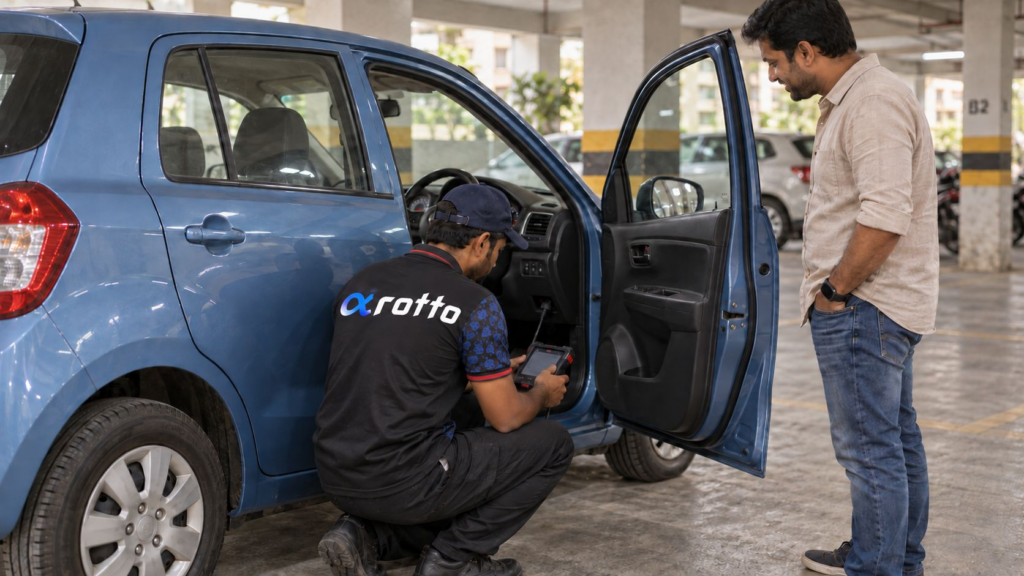
- Get a diagnostic check before replacing parts
An on-board diagnostics (OBD) scan reads stored fault codes. Ask the technician to explain the codes, the checks carried out and the evidence behind any repair recommendation. Treat the scan as part of the investigation, not a shopping list of replacement parts.
Ask for the findings and an itemised quote before approving work. Our guide on questions to ask before approving a car repair quote can help you review the estimate.
5. Fix the cause, not just the warning
Switching the warning off is not the same as repairing the fault. Arrange testing even if the light later disappears, especially if
symptoms remain or the warning returns. Ask how the repair will be checked afterwards.
The AA’s engine management light guide also recommends professional checks rather than ignoring or simply resetting the warning.
What can cause the check engine light?
Several faults can produce the same warning. Possibilities include:
- An oxygen-sensor or air-measurement fault affecting engine control.
- Worn spark plugs or an ignition-coil problem on a petrol car.
- A fuel-cap or fuel-vapour-system problem on applicable vehicles.
- An emissions-system issue, including a diesel particulate filter problem.
These are examples, not a remote diagnosis. Petrol and diesel cars have different systems, so share the model, fuel type and symptoms when arranging a check.
Check engine light help in Bangalore
Do not turn a warning into a long drive through Bangalore traffic. Rotto offers doorstep car care and inspections at your parking spot. Contact the team through rotto.one, describe the warning and ask about a suitable inspection for your car.
Rotto’s inspection process provides findings and a written quote before approved work begins. If the light is flashing or the car has serious symptoms, arrange assistance rather than driving it to a service location. The findings should determine the next step.
FAQs
Is a brief light at startup normal?
It can be a normal system check. A light that stays on after starting or flashes while running needs attention.
Can I drive a fixed number of kilometres?
There is no universal safe distance. Follow your manual, the light’s behaviour and the car’s symptoms.
Does a steady light mean a minor repair?
No. A car that feels normal can still need testing. Do not approve parts based on the light alone.
Leave a Reply